If you’ve ever seen someone say “PM me” and paused for a second, you’re definitely not alone. It looks simple, but it can actually mean different things depending on context.
In texting, social media, or even on a clock, what does PM mean changes completely. That’s where most confusion starts.
A “PM,” or “Private Message,” refers to a one-on-one, private conversation between two people on a messaging platform—essentially the same idea most people mean when they say “DM me.” In everyday use, PM and DM are often treated as interchangeable, both describing a direct, personal exchange away from public view.
However, the phrase “DM” (Direct Message) can be slightly misleading. While “direct” suggests any form of reaching out to someone, its commonly accepted meaning is still a private, inbox-style conversation not public actions like tagging someone in a post or mentioning them in comments.
Tagging or commenting may be direct in a broader sense, but they are not considered “DMing” in standard online communication.
In short, both PM and DM typically refer to private, one-on-one messaging, even if the wording might seem broader at first glance.
Let’s break it down in a simple, real-world way so you never misunderstand it again.
What Does PM Mean in Text Messaging? (Core Meaning Explained)
In most online conversations, PM meaning in chat stands for:
Private Message
So when someone says:
- “PM me”
- “I’ll PM you”
- “Check your PMs”
They simply mean:
👉 Move the conversation to a private chat.
This is the same idea as asking for a one-on-one conversation instead of speaking publicly in comments or group chats.
What is the meaning of PM in message contexts?
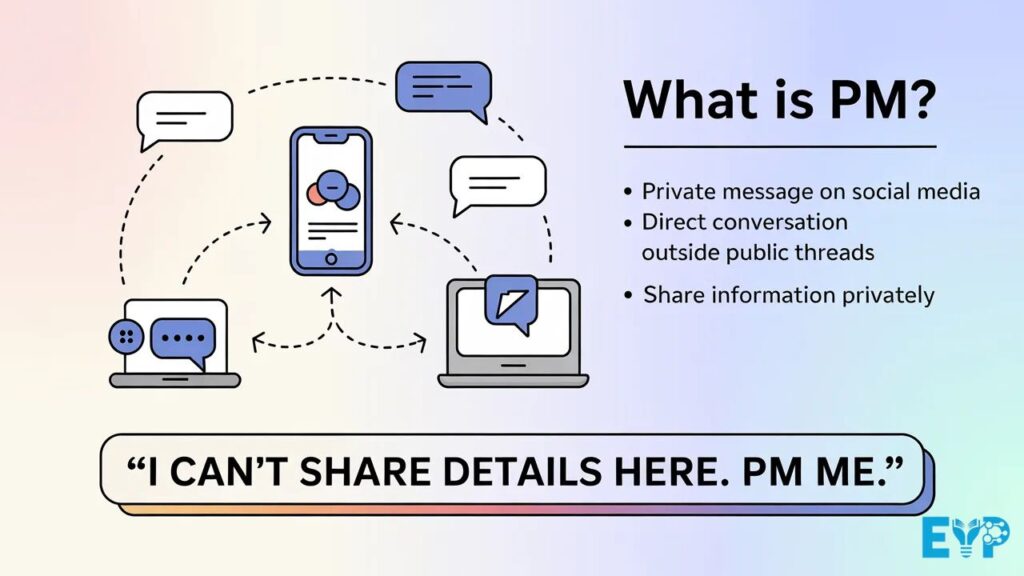
It usually refers to:
- Sending a private message on social media
- Starting a direct conversation outside public threads
- Sharing information privately
For example:
“I can’t share details here. PM me.”
That means the person doesn’t want to discuss it publicly.
Why People Use PM Instead of Public Replies
There’s a simple reason PM became popular: privacy and control.
People use it when they want to:
- Share personal information
- Avoid public arguments
- Discuss business deals privately
- Keep conversations clean in group chats
Real-life example:
Imagine someone selling a phone online:
“Price is negotiable. PM me.”
They don’t want 20 people commenting prices publicly.
So instead, they move to private chat.
PM vs DM: Are They the Same Thing?
This is where most confusion happens.
Short answer:
Yes… but not exactly.
| Term | Meaning | Common Platforms |
|---|---|---|
| PM | Private Message | Facebook, forums, older platforms |
| DM | Direct Message | Instagram, X (Twitter), Snapchat |
Key difference:
- PM is older internet slang
- DM is modern social media language
So if you hear:
- “PM me” → older or Facebook-style usage
- “DM me” → Instagram, Snapchat, Twitter style
What is dm meaning in chat?
It means the same thing: a private message between two users.
PM Meaning Across Different Social Media Platforms
PM meaning on Facebook
On Facebook, people still commonly say:
- “PM me your number”
- “I sent you a PM”
So, what does pm mean on facebook?
👉 It means sending a message through Messenger privately.
PM meaning on Instagram
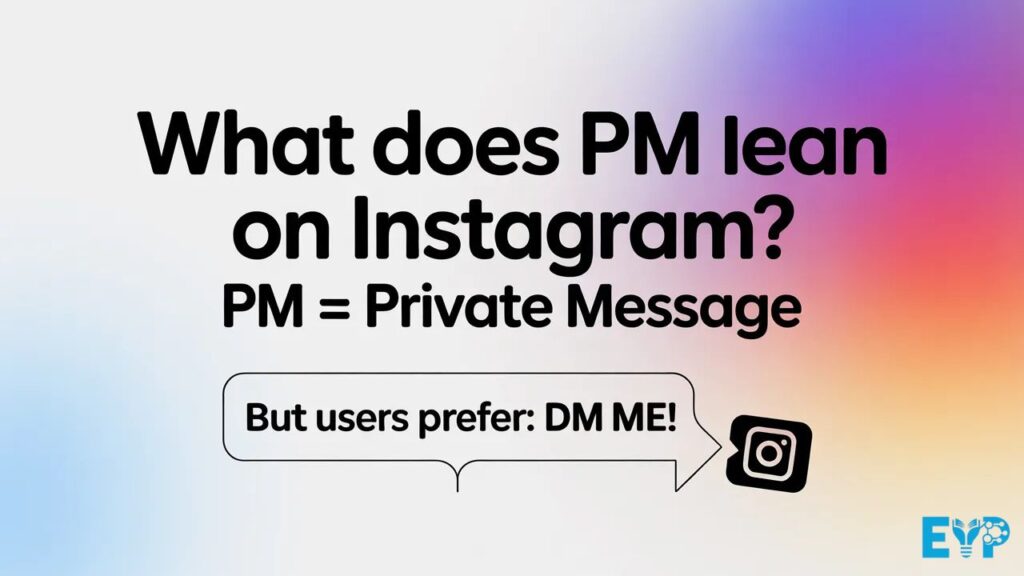
On Instagram, PM is less common now.
Instead, users say:
- “DM me”
So, what does pm mean on instagram?
👉 It still means private message, but DM is preferred.
What does PM mean on Snapchat?
On Snapchat, people usually say:
- “DM me” or “Snap me”
So, what does pm mean on snapchat?
👉 It refers to a private chat, but Snapchat uses its own messaging system.
What does PM mean on TikTok?
On TikTok, PM is often used in comments:
Example:
“PM me the sound name”
So, what does pm mean tiktok?
👉 It means move the conversation to private messages.
Meaning of PM in WhatsApp chat
In WhatsApp, people rarely say PM because chats are already private.
So:
- Instead of “PM me,” people just say “message me”
Still, meaning of pm in whatsapp chat = private conversation outside group chats or forwards.
PM Meaning in Chat (General Definition)
So what does PM mean in text overall?
Simple definition:
PM = a private conversation between two people online
It is part of broader messaging abbreviations used in digital communication.
Other similar abbreviations include:
- DM = Direct Message
- IM = Instant Message
- PM = Private Message
PM vs Public Reply: Why It Matters
People choose PM instead of public replies because:
1. Privacy
Sensitive details stay hidden.
2. Control
You control who sees your message.
3. Convenience
No clutter in comment sections.
4. Safety
Prevents scams or oversharing in public.
PM Meaning in Time (Post Meridiem Explained)
Now let’s switch gears completely.
Because PM doesn’t only mean messaging.
In clocks, PM stands for:
Post Meridiem
What does PM and AM stand for?
- AM = Ante Meridiem (before noon)
- PM = Post Meridiem (after noon)
So:
- 3 PM = afternoon
- 9 PM = night
Does PM mean night?
Not always.
PM includes:
- Afternoon (12 PM – 5 PM)
- Evening (5 PM – 8 PM)
- Night (8 PM – 11:59 PM)
So yes, it can include night, but not exclusively.
PM meaning in clock usage
When someone says:
“Meet me at 6 PM”
It means:
👉 6 in the evening time.
What does a.m. stands for in time?
- AM = morning hours (12 AM to 11:59 AM)
- PM = afternoon and evening hours
How Do You Know Which PM Meaning Is Being Used?
This is where context becomes everything.
Quick rule:
| Situation | Meaning |
|---|---|
| Chat message | Private Message |
| Time mentioned | Post Meridiem |
| Social media comments | Private Message |
| Schedule or clock | Post Meridiem |
Example:
- “Meet me at 5 PM” → time
- “PM me the details” → message
Real Conversation Examples of PM
Messaging examples:
- “PM me the address.”
- “I’ll PM you later.”
- “Check your PMs.”
Time examples:
- “The show starts at 8 PM.”
- “We’ll meet at 2 PM.”
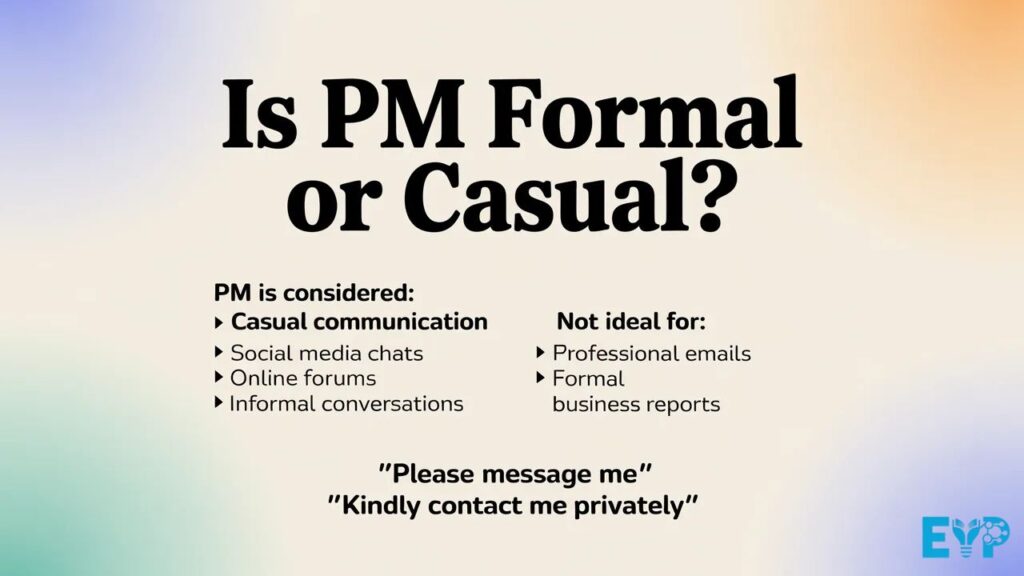
Is PM Formal or Casual?
PM is considered:
👉 Casual communication
You’ll mostly see it in:
- Social media chats
- Online forums
- Informal conversations
Not ideal for:
- Professional emails
- Formal business reports
Instead, people use:
- “Please message me”
- “Kindly contact me privately”
PM Etiquette: How to Use It Properly
Using PM the right way matters more than people think.
Good practice:
- Ask politely: “Can you PM me?”
- Be clear about why
- Respect boundaries
Bad practice:
- “PM me now!!!”
- Spamming requests
- Demanding private info publicly
PM in Business and Online Selling
On platforms like Facebook Marketplace or freelance groups:
You’ll often see:
- “PM for price”
- “PM me for details”
This is used because sellers:
- Avoid public negotiation chaos
- Want serious buyers only
- Keep sensitive info private
Common Misunderstandings About PM
People often get confused and think:
- PM always means messaging (wrong)
- PM is only modern slang (wrong)
- PM is universal across all apps (wrong)
Context always decides meaning.
Why PM Became So Popular Online
PM became popular because early internet platforms needed:
- Private communication tools
- Simple abbreviations
- Faster messaging systems
Before apps like WhatsApp or Instagram DM, PM was the standard term.
Language Evolution: PM in Digital Communication
Online language changes fast.
Today:
- PM is older but still used
- DM is more dominant in modern apps
This shift shows how digital communication language evolves with platforms.
Common PM Examples You’ll See Online
- “PM me the details”
- “Check your PM inbox”
- “Sent you a PM already”
- “DM or PM me for info”
FAQ: PM Meaning in Text
What does PM mean in text slang?
It means Private Message between users.
Is PM the same as DM?
Yes, but DM is more modern.
Can PM mean time?
Yes, it means Post Meridiem.
Is it rude to say “PM me”?
No, but tone matters.
Should I use PM in professional emails?
No, use formal wording instead.
Final Thoughts: What Does PM Really Mean?
Private messaging comes with its own set of guidelines and etiquette across different social platforms. It reflects how people communicate respectfully in one-on-one digital conversations. Now that you understand the meaning of “PM,” you can use it effectively to connect through channels like email, text messages, Facebook, Instagram, Snapchat, and Twitter.
PMs are especially useful when you need a more personal or private space to talk with friends or others. However, it’s important to use private messaging responsibly. Keep your conversations respectful and safe, as many platforms like Facebook use algorithms to monitor suspicious activity and flag inappropriate behavior.
At the end of the day, what does PM mean depends entirely on context.
It can mean:
- A private message in chat
- A time indicator on a clock
Once you understand that difference, everything becomes simple.
So next time you see “PM me” or “6 PM,” you won’t hesitate for even a second.

Muhammad Bilal is an expert blogger specializing in meanings in text, delivering clear, engaging insights that help readers understand modern language, slang, and digital communication trends.
This is my first time visit at here and i am genuinely pleassant to
read all at alone place.